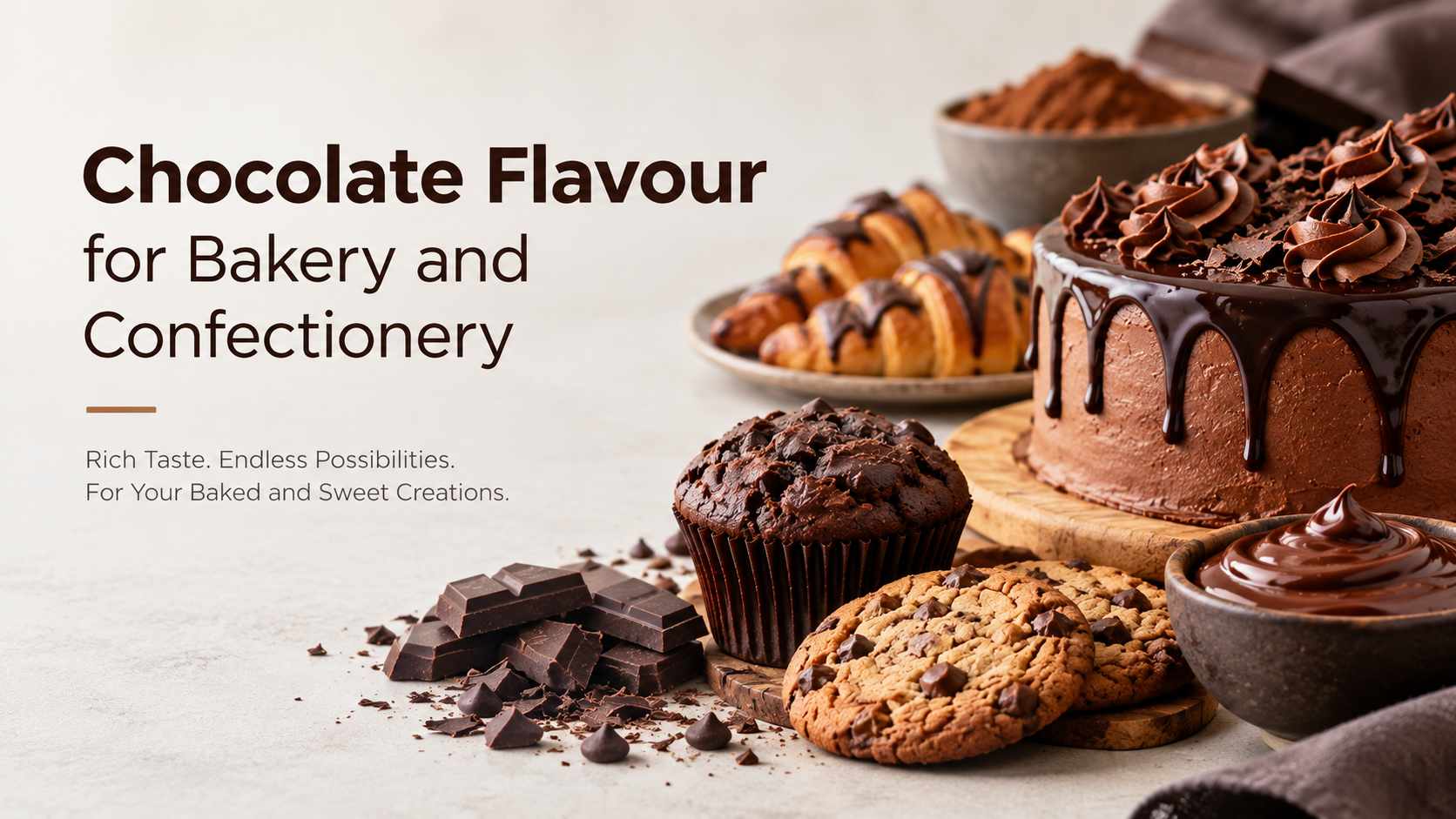
A chocolate biscuit dough can smell rich on the mixer and come out of the oven tasting of little more than sugar and flour. Cocoa powder brings colour and some bitterness, but much of the aroma that makes people think “chocolate” is volatile, and oven heat drives it off. That gap is why manufacturers add a chocolate flavour for bakery lines, and why the wrong choice shows up fast. A liquid flavour that works in a cake batter can thicken a melted coating into a grainy lump. A flavour that tastes full in a cream filling can fade to nothing in a hard-baked cookie. And a nature-identical flavour that is labelled one way in India has to be labelled another way on a pack bound for the USA. This guide explains which chocolate profiles suit which products, when to choose liquid or powder, how to protect flavour through the bake, and how to label it.
Key Takeaways
• Cocoa and flavour do different jobs. Cocoa powder gives colour, body and bitterness, while a flavour restores the roasted, sweet aroma that baking strips away.
• Match the profile to the product. Dark and classic profiles suit brownies and biscuits, milk profiles suit creams and fillings, and specialty profiles give a product its own identity.
• The process decides the form. Liquid flavours mix easily into batters and creams, while encapsulated powders suit dry mixes and protect aroma through heat.
• Water ruins melted chocolate. Flavours carrying water or alcohol can make chocolate seize, so fat-based coatings need oil-soluble flavour.
• Oven heat costs you aroma. Volatile compounds evaporate during baking, so taste the cooled product before you fix the dose.
• Labels differ by market. India recognises natural, nature-identical and artificial flavours, while US rules label nature-identical flavour as artificial.
• Vanilla, nut and caramel notes make chocolate taste fuller. Small amounts of these partner flavours round out a thin chocolate profile.
• Norex’s chocolate range is nature-identical, offered in liquid and, for some profiles, encapsulated powder form.
What a Chocolate Flavour Adds That Cocoa Cannot
Cocoa and chocolate flavour are often treated as substitutes. They are not. Knowing what each one contributes saves a lot of wasted trial batches.
Cocoa builds colour and body, flavour builds aroma
Cocoa powder gives a baked product its brown colour, a dry bitterness and a feeling of richness in the mouth. What it does not always carry through the oven is the sweet, roasted smell people expect when they open the pack. A flavour fills in that aroma. It cannot fix a pale, low-cocoa biscuit, though. If the product needs to look like chocolate, it needs cocoa or colour. Flavour only completes the picture.
Where chocolate aroma comes from
Much of chocolate’s smell is created when cocoa beans are roasted. Sugars and amino acids react in the heat and form pyrazines, which give malty, roasted, nutty and cocoa notes. Aldehydes add malty and almond-like touches. A good chocolate flavour rebuilds this roasted character, which is why it tastes “chocolatey” even at low doses.
Natural cocoa and Dutch-process cocoa change the base
Natural cocoa is acidic and tastes fruitier. Dutch-process cocoa is treated with alkali, so it is darker and less acidic, with a flatter, deeper chocolate taste. The two also react differently with leavening: natural cocoa pairs with baking soda, Dutch-process with baking powder. Your cocoa choice changes what the flavour has to add, so decide on the cocoa before you shortlist flavours.
Types of Chocolate Flavour for Bakery and Confectionery
Chocolate is not one taste. A brownie, a cream wafer and a milk toffee each need a different profile, and the right chocolate flavour for bakery work depends on what the finished product should remind people of.
Classic and dark chocolate profiles
Brownies, chocolate cakes, muffins and cookies usually want a bold cocoa character with some bitterness. Norex’s Chocolate flavour is described as “characteristic, chocolate like” and comes as liquid, powder and encapsulated powder for bakery, confectionery, dairy and pharma use. Dark Chocolate SD is an encapsulated powder listed for pharma applications, not bakery.
Milk chocolate and creamy profiles
Cream fillings, wafers, toffees and frostings often need a softer, sweeter note with a dairy edge. Milk Chocolate is described as milky and sweet, and is offered as a liquid or encapsulated powder for bakery, confectionery, dairy and pharma.
Specialty profiles that give a product identity
A signature product often needs a twist rather than plain cocoa. Belgium Chocolate carries a chocolate fudge character for bakery and confectionery. Chocolate Bourbon is a liquid for bakery use. Cocoa Butter gives a buttery, slightly bitter note to cakes and pastries. All three are nature-identical liquids.
Liquid or Powder: Choosing a Chocolate Flavour for Bakery Lines
The form of the flavour matters as much as the taste. The right answer depends on your mixing process and your oven.
Liquid flavours for batters, doughs and creams
Liquids disperse quickly in wet systems. They suit cake batters, soft doughs, cream fillings and syrups, where the flavour can be stirred in and spread evenly. They are also easy to dose on a production line with a measuring jug or pump.
Chocolate flavour powder for dry mixes and high heat
A chocolate flavour powder suits premixes, cake mixes, dusting blends and dry fillings. Encapsulated powders go a step further. The flavour is locked inside a carrier such as maltodextrin or starch, which shields it from heat and oxygen until moisture or heat releases it. That makes encapsulated flavour a sensible choice for crackers, hard biscuits and other long, hot bakes.
Oil-soluble flavour for chocolate and coatings
Melted chocolate and fat-based coatings react badly to water and alcohol. Even a small amount can make them seize, turning a smooth coating thick and grainy. For direct use in chocolate or compound coatings, choose an oil-soluble flavour. Fillings and ganache-style centres are more forgiving and can often take either type. Ask your supplier which carrier a flavour uses before it goes near a tempering kettle.
How Oven Heat Changes Chocolate Flavour for Bakery Products
Every baker has seen a product that tasted perfect as dough and flat as a finished biscuit. The oven is usually the reason.
What escapes in the oven
Aroma compounds are volatile by nature. At oven temperatures, many of them evaporate along with the moisture leaving the product. Losses tend to track moisture loss, so thin, dry products such as cookies and crackers are the most exposed. Longer and hotter bakes make it worse.
Protecting flavour through the bake
There are three practical fixes. Use an encapsulated powder for high-heat products. Move some of the flavour into a part added after baking, such as a cream filling, coating or glaze. And adjust the dose based on the finished product, not the dough.
Finding the right dose of chocolate flavour for bakery trials
No single dose works for every recipe, so start from the supplier’s recommended level and bake three trial batches around it. Taste the products once fully cooled, because warm bakes smell stronger than they will on the shelf. Repeat the check on a sample from a real production run, since commercial ovens and lab ovens rarely behave the same way.
Chocolate Flavour for Confectionery and Coatings
Confectionery brings its own rules. The fat system, the sugar stage and the regulations all shape how flavour is used.
Compound coatings versus chocolate
Compound coatings replace cocoa butter with other vegetable fats such as palm, palm kernel or coconut. They need no tempering, usually cost less and suit baked and snack products well. They can also carry added flavour to boost the chocolate or milk note, which chocolate standards restrict. In India, a product sold as chocolate may contain other vegetable fats only up to 5 percent of the finished product, with a bold declaration on the pack.
Fillings, toffees and cream centres
Toffees, caramels, cream centres and sandwich-biscuit creams give flavour a gentler ride than an oven does. These are good places to carry chocolate character, especially in products where the baked shell itself holds little flavour. Buttery partners such as Caramel Butter and Butterscotch sit naturally alongside chocolate in these formats.
Pairing Flavours That Make Chocolate Taste Richer
A chocolate profile that tastes thin can often be fixed by adding something that is not chocolate at all.
Vanilla and vanillin
Vanilla is the classic partner. It softens bitterness and makes chocolate read as sweeter and rounder. Options range from a ready-made Vanilla flavour to the aroma chemicals Vanillin and the stronger, sweeter Ethyl Vanillin. The Aroma Chemicals collection lists both.
Nut, coffee and roasted notes
Roasted notes deepen chocolate because they share some of the same aroma chemistry. A touch of Hazelnut, described as nutty, roasted and earthy, suits spreads, wafers and premium biscuits. Coffee flavour, with nutty and smoky notes and slight bitterness, is listed for confectionery and dairy use. It adds depth to mocha fillings and dark chocolate confections.
Labelling Chocolate Flavour for Bakery Products in India and the USA
A flavour can be compliant in one market and mislabelled in another. Check the destination before you print packaging.
How India classifies flavours
FSSAI recognises three classes of flavouring. Natural flavours are obtained only by physical processes from plant, and sometimes animal, raw materials. Nature-identical flavouring substances are chemically identical to substances found in nature, but are isolated chemically or made synthetically. Artificial flavouring substances have not been identified in natural products. Each chocolate flavour Norex currently lists carries a nature-identical legal status, so a nature identical chocolate flavour is what your label should reflect.
How the USA treats the same flavour
US rules sort flavours by origin, not by chemistry. Under 21 CFR 101.22, a natural flavor must come from listed natural sources such as plants, dairy or fermentation. Anything else, including a synthetic molecule identical to one in nature, is an artificial flavor. So a nature-identical chocolate flavor used in India would normally be declared as artificial flavor on a US pack.
Quick Checklist for Choosing a Chocolate Flavour
1. Decide what cocoa is doing in the recipe: colour, bitterness or body.
2. Pick the chocolate profile that matches the finished product.
3. Choose liquid for wet systems and encapsulated powder for dry mixes and hard bakes.
4. Use oil-soluble flavour for melted chocolate and compound coatings.
5. Bake three trial doses and judge the cooled product.
6. Consider moving some flavour into fillings, creams or coatings.
7. Try a small amount of vanilla, nut or coffee to round out a thin profile.
8. Confirm the flavour’s legal status and label it for each destination market.
Conclusion
Good chocolate products rarely rely on cocoa alone. Cocoa sets the colour and the base taste, while a well-chosen flavour puts back the aroma that roasting created and the oven takes away. The choices follow a simple order. Start with the product and the profile it should suggest. Let your process decide between liquid and powder, and keep water-based flavours away from melted chocolate. Plan for heat loss by trialling doses on cooled products, and use fillings or coatings to carry flavour where the bake is harsh. Finally, label the flavour correctly for India, the USA or wherever the product is sold. Get these steps right and the chocolate note stays consistent from the first batch to the thousandth.
Why Work With Norex
Norex has made flavours, fragrances and essential oils for food, beverage and pharmaceutical companies since 1994. Its production base sits in Western Uttar Pradesh, about 110 km from Delhi.
• Several chocolate profiles in one place. Classic chocolate, milk chocolate, Belgium chocolate, chocolate bourbon and cocoa butter flavours, plus partner flavours, across 138 products in the Flavours collection.
• Liquid and powder formats. Flavours are offered in liquid and powder forms depending on the application, with encapsulated powder available for selected profiles.
• Custom development. An in-house R&D lab builds bespoke flavours when a standard profile does not fit your brief.
• Certified production. ISO 9001, ISO 22000 and ISO 14001 certification, WHO-GMP operations, and production lines listed as FSSAI, Kosher and Halal certified.
• Double quality checks. Every production lot goes through two rounds of testing before release.
• Supply for India and the USA. Exports reach 50+ countries, and a subsidiary in New Jersey serves buyers in the Americas. Learn more about Norex or browse other guides on the Norex blog.
Talk to Norex About Chocolate Flavours
Developing a new chocolate biscuit, reformulating a cake mix or fixing a coating that seizes? Ask for a sample or a technical discussion through the contact page.